




On May 22, 2024, the International Day for Biological Diversity was held in Hainan, and my country updated and released the "China Biodiversity Conservation Strategy and Action Plan (2023-2030)". As one of the earliest parties to sign and ratify the Convention on Biological Diversity, China attaches great importance to biodiversity conservation, continues to strengthen biodiversity surveys, monitoring and assessments, and organizes ecosystem resource surveys, species resource surveys and various resource censuses. Many central enterprises and state-owned enterprises have actively responded to biodiversity conservation actions, carried out regional environmental governance and ecological restoration, and paid attention to the impact of changes in nature and biodiversity on enterprises, and took timely response measures.
As changes in nature and ecosystems are gaining more and more attention, the capital market needs more complete information to price assets and allocate capital reasonably. The Taskforce on Nature-Related Financial Disclosures (TNFD) is a market-led initiative. It was prepared and initiated by 75 member units around the world (covering financial institutions, companies, government regulators, think tanks and market alliances) in July 2020 and was officially established in October 2021. TNFD will release the final version of the framework recommendations for managing and disclosing nature-related risks in September 2023, so as to better identify and manage risks and opportunities related to the natural environment and promote information disclosure by companies and market stakeholders. The TNFD framework provides a basic concept and definition for the term "nature", dividing it into four major areas: land, ocean, freshwater and atmosphere; due to the different functions of different areas, there are also large differences between different regions, biomes and ecosystems.
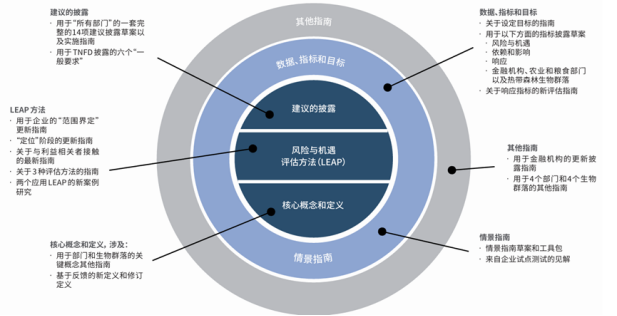 |
| Figure TNFD release framework overview |
TNFD aims to integrate natural risk factors into corporate management and business decisions, guide global funds to flow to areas that improve the natural environment, and integrate risk management and disclosure content so that companies can disclose and respond to changing nature-related risks such as deforestation and habitat destruction, species loss, drought, land use changes, etc.
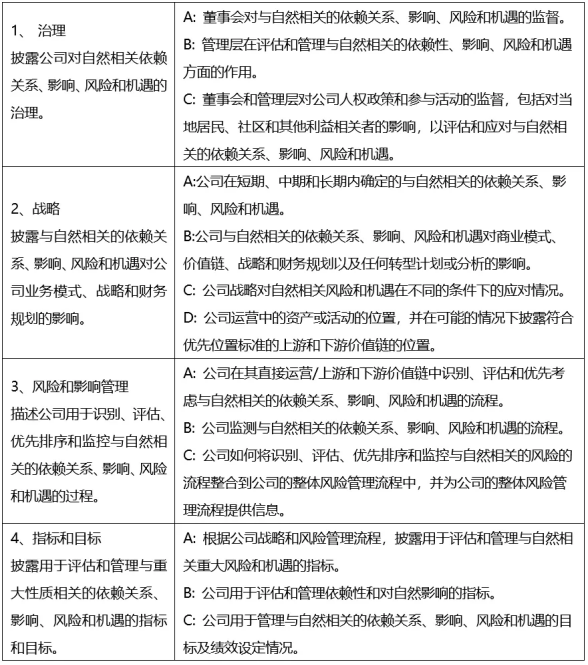
TNFD Disclosure Framework
LEAP Analysis Path
As the risks associated with nature in financing activities such as lending, investment and insurance, as well as all other consulting activities, are very complex, TNFD provides companies and financial institutions with a path to assess and disclose their dependence on and impact on nature - LEAP, which consists of Locate, Evaluate, Assess and Prepare, and emphasizes the integration of science-based, location-first approaches into corporate and portfolio risk management.
The LEAP approach provides a step-by-step process for companies to assess their nature-related impacts and dependencies across their direct operations and value chains, and to prioritize nature-related risks and opportunities.
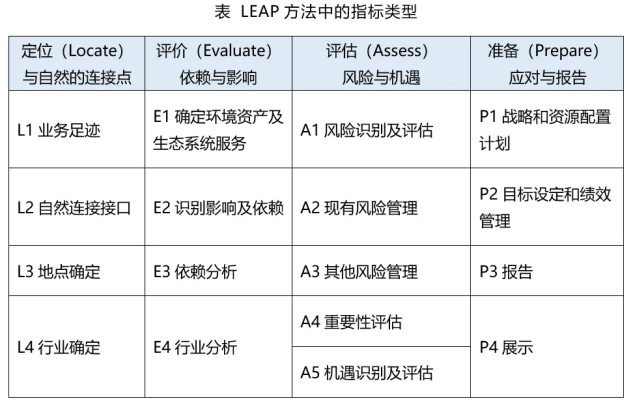
Positioning the connection with nature
Positioning is a critical factor in the LEAP Guidelines. During the positioning process, companies need to identify priority locations with higher natural values to avoid loopholes in the value differences between different regions and the same areas when assessing natural risks and opportunities. Before assessing how to affect environmental assets and ecosystems, companies can first carefully study the "biomes" in which their operations and value chains are located to ensure that risks and opportunities are correctly identified and quantified.
In order to understand the interaction between the company and the natural environment and screen sensitive points, the company can use geospatial analysis methods to screen and evaluate the natural conditions of the company's main operating areas. The screening assessment can select appropriate assessment criteria based on the company's business characteristics.
Assessing impacts and dependencies
Companies need to assess the key impacts and dependencies on nature in direct operations and upstream and downstream value chains, and can use ENCORE and SBTN industry-level importance assessment tools. Generally speaking, important drivers of natural impacts include land, water and ocean use, resource development, climate change, pollution and species invasion; natural dependencies mainly include direct inputs of natural resources, natural factors related to production, and measures to reduce natural impacts.
Assessing nature-related risks and opportunities
Companies can use WWF’s risk screening tool to assess nature-related physical and transition risk opportunities based on dimensions such as geographic location, industry category and asset information. The assessment must involve analysis of risks and opportunities in various dimensions related to nature, and consider the impact of the company’s operations on ecosystems, wildlife and biodiversity.
Prepare to respond and report
At the end of the assessment, the company should be prepared to present the resulting risk management, strategy and resource allocation decisions. Based on the risks and opportunities identified, management should set objectives and define and measure performance in managing nature-related dependencies, impacts, risks and opportunities.
Case Study
China Mengniu Dairy Co., Ltd. ("Mengniu"), as a leading dairy company in my country and one of the top eight dairy companies in the world, demonstrated its high attention to natural capital under the TNFD framework in its 2023 "Nature-related Information Disclosure Report". By analyzing the relationship between business operations and upstream and downstream links of the value chain and nature, it assessed the impact and dependence on nature, identified nature-related risks and opportunities, and provided an example reference for the dairy industry to achieve "harmonious coexistence with nature".
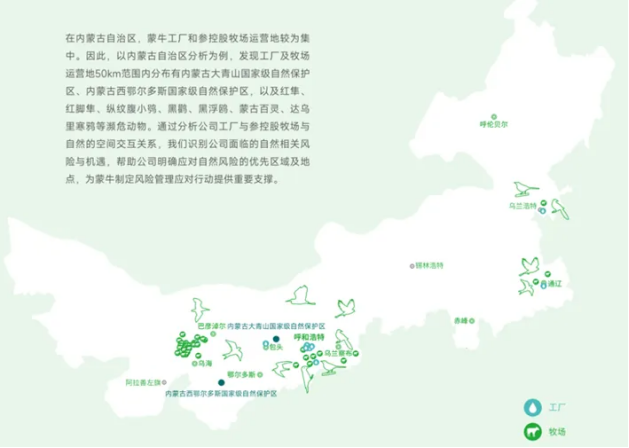
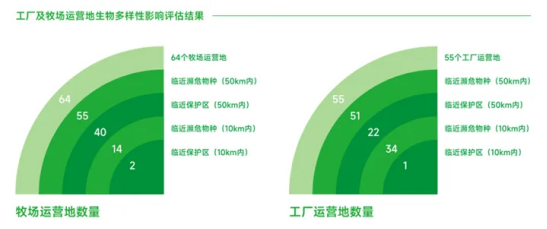
Figure: Identification of Mengniu Dairy’s relationship with nature and biodiversity impact assessment
Source: Mengniu official website (https://www.mengniu.com.cn/sustainable.html)
The dairy industry is closely linked to the ecological environment. Mengniu uses the LEAP assessment method, with 68 factories at home and abroad as the basic assessment objects, extending the scope of the assessment to the upstream of the value chain, further including the participating and controlled ranches that provide raw milk to Mengniu; analyzing whether the operating sites of each factory and major ranch involve biodiversity conservation priority areas such as endangered species, biodiversity conservation areas and biodiversity sensitive areas, to provide basic support for the identification and management of nature-related risks and impacts.
TNFD Disclosure Indicators
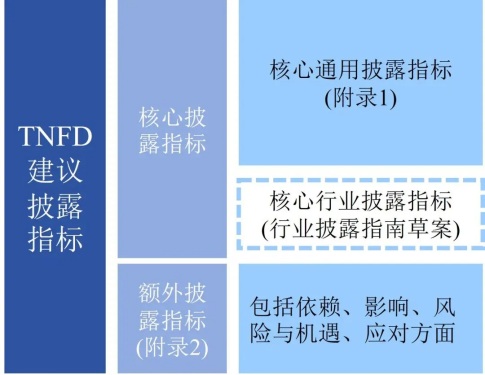
TNFD's disclosure indicators consist of "core disclosure indicators" and "additional disclosure indicators". Based on the disclosure framework, the core disclosure indicators include "core general disclosure indicators" applicable to all industries and "core industry disclosure indicators" for eight major industries. In addition to the disclosure framework, TNFD has also issued a set of additional guidelines to help companies identify, evaluate, manage and disclose nature-related issues. TNFD's disclosure framework and guidelines will help companies and financial institutions incorporate natural information into their decision-making, risk management and disclosure, and ultimately guide global funds to flow into the field of improving the natural environment.
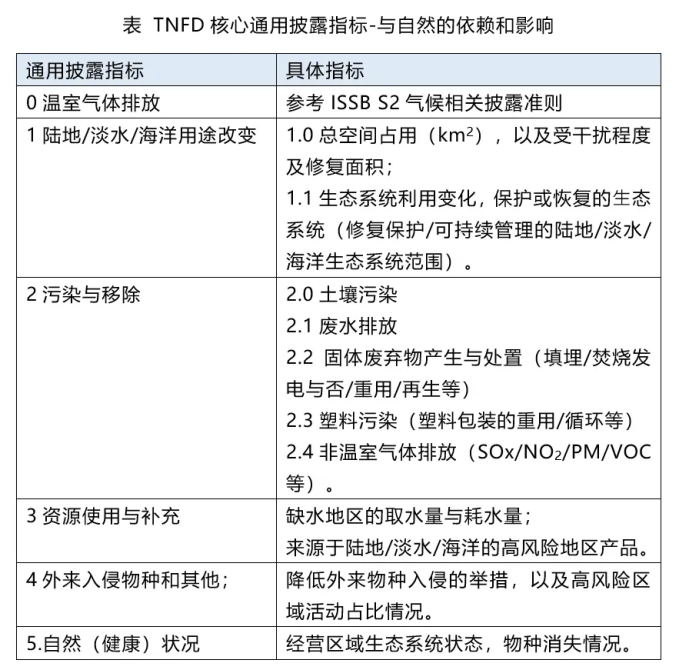
TNFD Draft Industry Disclosure Guidelines
To facilitate investors and other stakeholders to compare the performance of companies in terms of nature-related situations within their industries, TNFD analyzes the industry level through quantitative indicators. TNFD released the draft industry guidelines in November 2023 and is still soliciting market opinions, including disclosure indicators and indicator guidelines for some industries, as a supplement to the previous disclosure framework and other guidelines. Currently, TNFD has released nature-related risk assessment guidelines for oil and gas, metals and mining, forestry and paper, food and agriculture, power utilities, chemicals, biotechnology and pharmaceuticals, and aquaculture. In addition, TNFD provides additional guidance for companies in eight major industries to apply the LEAP approach in the draft industry guidelines.
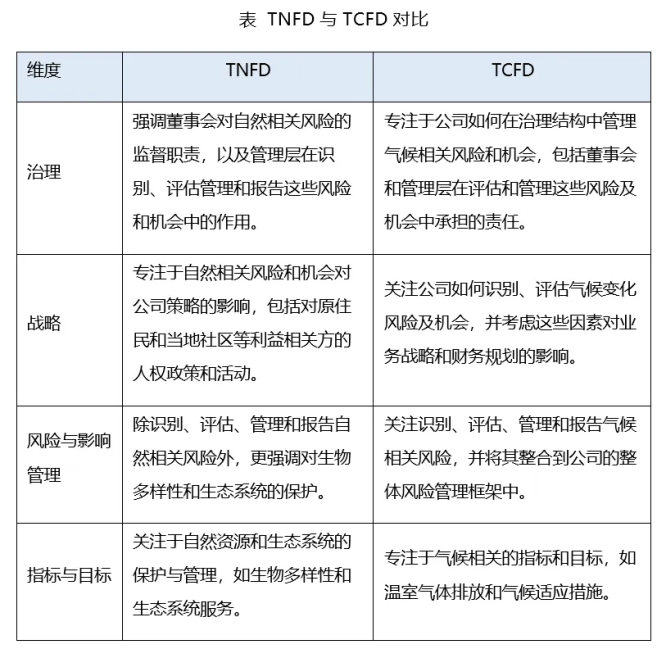
Comparison between TNFD and TCFD
Compared to TCFD, which focuses on improving companies' disclosure of risks and opportunities in climate change, TNFD has a broader scope, covering not only climate change but also other nature-related issues such as biodiversity, land use, water resources and ecosystem services.
The purposes of establishing TNFD and TCFD are also different. The goal of TCFD is to help companies identify, assess and manage climate-related risks and opportunities so that investors, creditors and other stakeholders can make informed financial decisions. TNFD provides a framework and tool set to help companies understand, assess and disclose the impact of their activities on natural capital and the impact of changes in the natural environment on the company, emphasizing the company's overall impact and dependence on the natural environment.
TNFD application
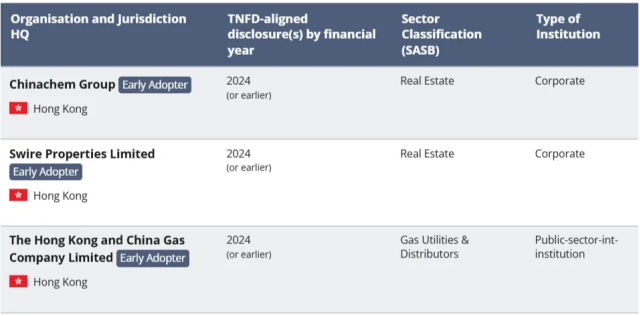
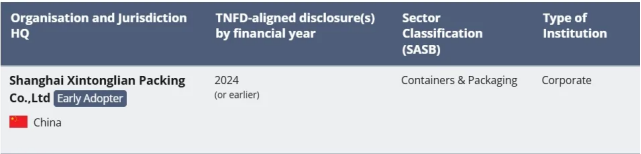
In January 2024, TNFD released the first list of early adopters, and the companies on the list will complete the disclosure in accordance with TNFD recommendations in fiscal year 2025 or fiscal year 2024 or earlier. Among them, Shanghai Xintonglian Packaging Co., Ltd. will disclose in fiscal year 2024 or earlier, belonging to the container packaging industry; three companies in Hong Kong will disclose in fiscal year 2024 or earlier, and the industries are mainly real estate and power utilities.
|
|
| Figure TNFD Partial list of companies responding in 2024 |
In addition, although many domestic companies such as ENN Group, Mengniu, and Tencent are not on the early response list, they have adopted the TNFD disclosure framework system to identify natural risks in their 2023 ESG reports. At present, the disclosure parties in my country that refer to the TNFD framework recommendations are mainly concentrated in industry leaders. Affected by factors such as the certain use threshold of natural risk identification tools and the limited attention paid by companies themselves, the actual application of the TNFD disclosure framework in my country is still in the early stages. It is expected that more companies will adopt the TNFD disclosure framework in their ESG reports in the future.
Subsequent impact of TNFD
Building on the experience of the TCFD, the TNFD is expected to have an impact in the following three ways:
- Influence on other standard systems: ISSB and GRI participated in the design and development phase of the TNFD framework as partners. TNFD also hopes to further help shape specific disclosure standards related to nature. At present, the 2024 version of "GRI 101: Biodiversity" has been officially released, replacing "GRI 304: Biodiversity (2016 version)". The new version mainly provides normative guidelines for biodiversity management and content disclosure and quantification of its impact, and provides reference and basis for companies to identify and measure potential risks arising from biodiversity loss; the European Sustainability Reporting Standards (ESRS) adopted by the European Union recommends the use of TNFD's LEAP assessment method to identify natural and biodiversity risks, and at the same time, "biodiversity and ecosystems" as a theme standard; the International Sustainability Standards Board (ISSB) plans to include "biodiversity, ecosystems and related services" in the priority development theme standards in the next two years; it is expected that more international organizations will cooperate with TNFD on natural information disclosure in the future.
- Provide reference for government regulations: TNFD will guide financial markets to price asset values and make corresponding capital allocations. The current market-led voluntary disclosure framework may quickly transform into part of the mandatory regulatory framework in many jurisdictions in the future. In addition, the TNFD framework is consistent with the goals of the Kunming-Montreal Global Biodiversity Framework, both of which call on governments to develop relevant documents on corporate disclosure of related risks, dependencies and impacts by 2030. On May 2024, International Earth Day, my country announced that it was preparing the "Implementation Plan for Major Biodiversity Conservation Projects". Other governments also clearly expressed their support for TNFD and considered adopting TNFD recommendations.
- Impact on corporate value: For enterprises, actively incorporating nature and biodiversity into the decision-making system can help them identify potential nature-related business opportunities, which may in turn increase brand value, expand business areas, attract new capital and increase revenue sources. If nature-related risks are not paid attention to in a timely manner, they may face the destructive impact of changes in natural resources on the supply chain and manufacturing business, which may lead to the risk of rising insurance premiums and capital costs, or be affected by the transition risks brought about by changes in regulatory policies.